
Call-out fee: $80–$180
What most Sydney plumbers charge to attend. Ask for it on the phone. Anyone who will not name it is telling you something.
The first thing that happens is not a booking. It is a plumber telling you what to shut off right now, because the minutes before anyone arrives are where most of the damage is either done or prevented.
After-hours work is not the same trade as daytime work. The parts have to be on the van because no supplier is open, the diagnosis has to be right first time because there is no second attendance that night, and the person answering the phone has to be able to tell a genuine emergency from something that is cheaper on Monday.
That last part matters more than it sounds. Telling you a job can safely wait costs us the callout and saves you a premium, and it is the fastest way to know whether the outfit you have rung is worth using again.


A drain on a slope moves water fast, and fast is not always good. Waste can outrun the liquid carrying it on a steep run and settle at the first flat section, building up at exactly the same spot each time.
Family blocks feed stormwater pits that fill with leaves and silt, so heavy Hills rain overwhelms them and water backs up across the yard.
The tell is a blockage that recurs at the same interval in the same place. That is a gradient problem, not a usage problem, and no amount of careful flushing fixes it — the answer is to see the profile of the line and correct the section that is wrong.
A yard that floods in every serious downpour is a different problem from one that flooded once in a freak storm. The first is a blocked or undersized line and it will keep happening; the second is weather.
Telling them apart takes a camera on a dry day, not a guess in the rain. If it has happened twice, book the inspection between storms — clearing a surcharging pit at the height of it costs more and tells you less.
The trees planted when these estates went up are now well established, and their roots push into pipe joints, a common cause of blockages here.
Root intrusion almost never causes a sudden emergency. It causes a slow narrowing, and then one ordinary Tuesday the last few millimetres close and everything backs up at once. That is why the call feels sudden when the cause is not.
Clearing it tonight is the right move and it is not the end of the story. Ask for the camera run afterwards, because the interval before the next one is set by how open the joint is, not by anything the household did.
Glenwood sits on the Hills and Blacktown border in Sydney’s Hills District (postcode 2768), an established family estate suburb built through the 1990s and 2000s, bordering Bella Vista, Kellyville, Stanhope Gardens and Parklea. Row on row of family homes on tidy estate blocks means a lot of maturing PVC pipework, and we know the local ground well.
On sloping ground the problem is rarely where the symptom is. Water leaves a failure at the highest point and surfaces at the lowest, which can be several properties away and well downhill of anything you would think to look at.
It is also why a neighbour's overflowing gully is sometimes your blocked line, and occasionally the reverse. We work uphill from the symptom rather than digging where the water appears.
If it is happening right now: stay out of moving water, lift what you can off the floor of the garage, and clear any grate you can reach safely from dry ground. Do not lift a surcharging pit lid — the water underneath is moving faster than it looks.
Once the rain stops, the pit that overflowed usually has a reason, and it is rarely the rain. Silt, roots or a collapsed section will do it, and the difference matters because one of those is a clean-out and the others are a repair.
Stop using water anywhere in the house. Every flush, every sink and especially the washing machine adds to whatever is already sitting in the line, and a machine mid-cycle is the single most common way a slow backup becomes a floor to mop.
If there is an overflow gully outside and it is running, that is the system doing its job and keeping it out of the house. Leave it clear and let it work until we arrive.
What most Sydney plumbers charge to attend. Ask for it on the phone. Anyone who will not name it is telling you something.
Against roughly $120–$160 in business hours. Nights, weekends and public holidays sit at the top of the range.
Call-out, the first stretch of labour and minor parts, for the common jobs: an isolated burst, a blocked toilet, a failed valve.
Slab leaks, gas line faults and anything needing walls opened at 2am climb quickly. You hear the number before we start, not after.
If it can genuinely hold, isolated, contained, water off, we will say so on the phone and book you at daylight rates instead.
The price is agreed before work starts, including at 2am. Figures here are indicative of the 2026 Sydney market rather than a quote from us, you get your own number as a fixed price before any work starts.
Not a call centre. You describe what is happening, we tell you what to shut off right now, and whether this genuinely needs someone tonight. Sometimes it does not, and we say so.
The nearest available crew heads for Glenwood with the common failure points already stocked on the van: pipe, fittings, valves, drain gear.
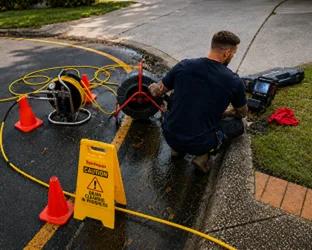
First job on site is stopping the damage: isolate, contain, make safe. Then you get a fixed price for the proper repair before it starts.

Most emergencies are permanently repaired on the spot. If a part has to wait for a supplier, you are left safe, watertight and functioning in the meantime.
Call and describe it. If it can hold, we will tell you, and book you at daytime rates. If it cannot, you will be glad you rang tonight.
Straight answers on rates, timing and when it can safely wait.

Call for the fastest response, any hour. Or send the form, after-hours enquiries get a callback from the on-call plumber, not an inbox.

Leave your details and our local Glenwood team will call you back fast.